










An Exchange of Energy, Not Just Money
Story: We observe a transaction. A piece of paper (or a tap of plastic) is exchanged for a cup and a plate. On the surface, it is commerce. But look deeper. It is an exchange of trust. It is gratitude. It is the energy of the farmer, the roaster, the baker, the server, all flowing into the hands of one person.
The Truth: To see commerce as a mere transaction is to live in a dead world. Every exchange is an exchange of life-force. When you understand this, you cannot help but act with intention and reverence. It is not about what it costs; it is about what it is worth.
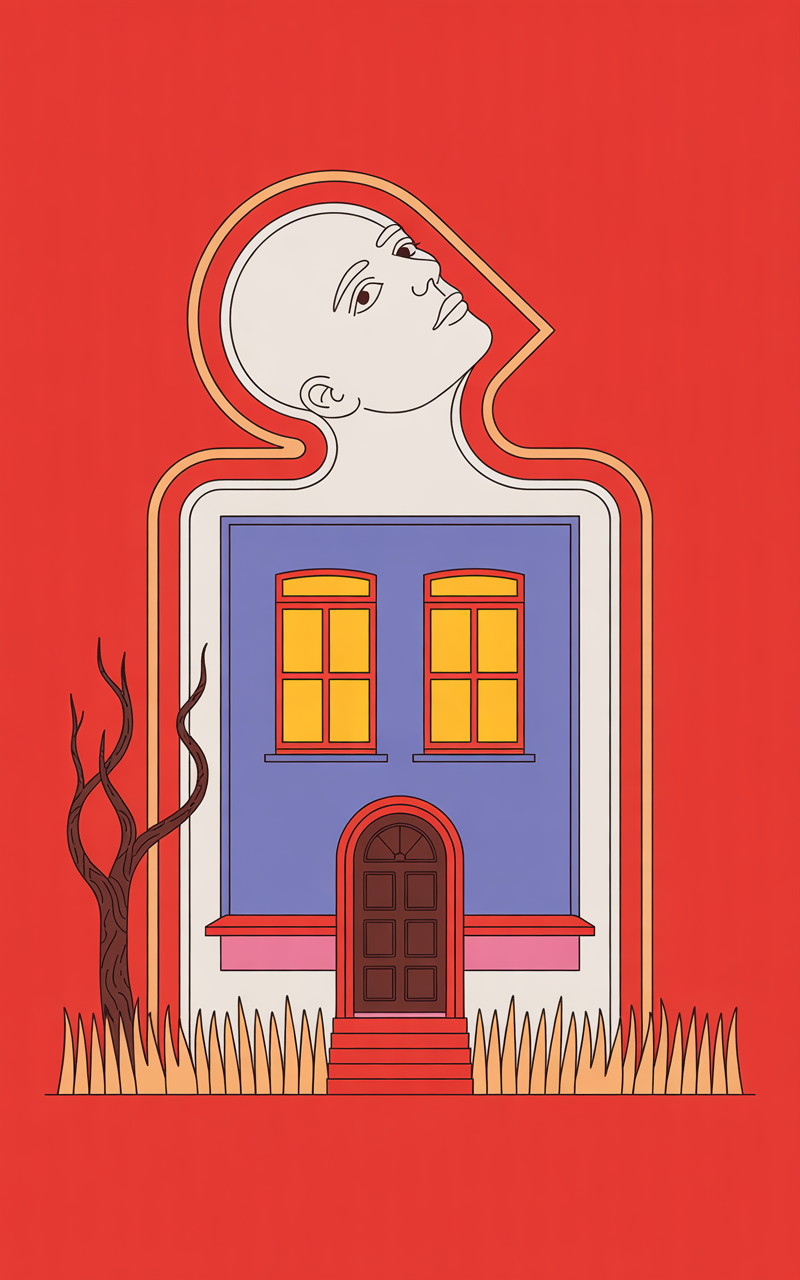
Are You at Home in Your Own Skin?
Story: A reflection on the feeling of sanctuary. Is it a place? We see people come here to feel 'at home'. But then they must leave. We pose a gentle, provocative question.
The Truth: We seek sanctuary in buildings, in other people, in places. But a place can be taken from you. A person can leave. The only true sanctuary is the one you build inside yourself. A café can be a beautiful reminder, a place to practice. But the real work is learning to be at home in your own being, no matter where you are.
Eating With Your Eyes Closed
Story: We invite the reader to try something. The next time they take a bite of something delicious, to close their eyes. We describe what happens: the sense of taste explodes. The texture becomes a landscape. The temperature becomes a feeling. It is a completely different experience.
The Truth: Your eyes are tyrants. They dominate your perception and tell you what you are supposed to taste. To close them is to stage a rebellion of the senses. It is to discover that your mouth knows more than your eyes do
Sharing Silence is the Loudest Intimacy
Story: We describe two people sitting across from each other at Heaffles. They are not on their phones. They are not even talking. They are just sharing the space, reading, occasionally looking up to share a small, knowing smile.
The Truth: To talk with someone is easy. To sit in silence with them without an ounce of awkwardness—that is intimacy. It is the unspoken declaration: "My stillness is safe with you."
The Aloneness of a Shared Meal
Story: A paradoxical observation. A group of friends is sharing a meal, laughing and talking. But the moment one of them takes a bite, the experience of that flavor, that texture, that joy, is happening in a universe only they have access to.
The Truth: A shared meal is a beautiful paradox. It is the most communal thing we do, yet the act of tasting is the most private, solitary experience. You are both together, and totally, beautifully, alone in your senses.
The Beautiful Lie of the 'Stranger'.
Story: A narrative observing two people at separate tables. They are 'strangers'. For an hour, they exist in their own worlds. Then, one asks the other for a napkin. A brief conversation starts. We pinpoint the exact millisecond the illusion of 'stranger' dissolves and two universes collide.
The Truth: There is no such thing as a stranger. There are only stories you have not yet heard and souls you have not yet recognized. 'Stranger' is a label the fearful mind uses to protect itself from the intimacy of the present moment.
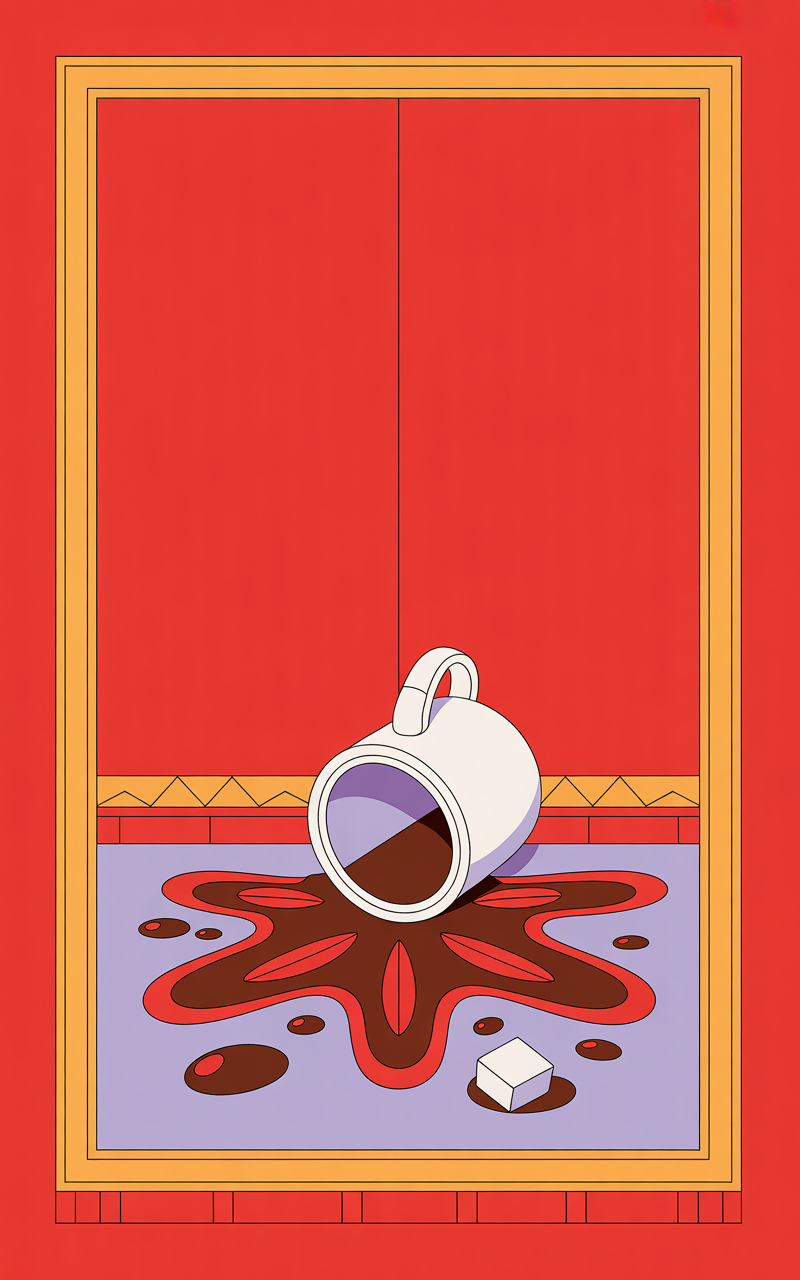
The Beauty of a Spilled Coffee
Story: A short, vivid narrative of the moment a tray is dropped. The crash. The silence. The immediate instinct is embarrassment, apology, a flurry of 'fixing'. But we describe the beautiful, abstract pattern the spilled coffee makes on the floor—a piece of unplanned, momentary art.
The Truth: We are obsessed with perfection and terrified of mistakes. But a mistake is simply an event that was not in your plan. It is a crack in the facade of control. And often, it is where the most unexpected beauty and humanity are found. Our heart is not in never spilling the coffee; it's in how we see the pattern when we do.
The Business I Had to Unlearn
Story: A vulnerable founder's story, framed not as a hero's journey, but as a process of unlearning. Unlearning the idea that 'busy equals successful'. Unlearning the fear of not having all the answers. Unlearning the need to be everything to everyone.
The Truth: Growth is not just about learning. It is, more profoundly, about unlearning. It is about shedding the skins of conditioning and false beliefs to reveal the simple, beating heart of your true purpose.
The Echoes in an Empty Room
Story: A lyrical description of the café after closing. The lights are dim. The chairs are empty. But the space is not empty. It holds the echoes of the day's laughter, the energy of a difficult conversation had at the corner table, the ghost of a shared smile.
The Truth: A place is not just wood and brick. It is a vessel. It soaks up the energy of what happens within it. We are not just building a café; we are building a container for authentic human experience, and its silence is as full as its noise.
The Fullness of an Empty Table
Story: A celebration of the person who comes to the café alone. They are not waiting for anyone. They are not lonely. They are in a state of solitude. We describe the richness of their experience—the deep focus on their book, the way they savor their drink, the simple peace of being their own companion.
The Truth: We confuse aloneness with loneliness. Loneliness is a poverty—the absence of another. Aloneness is a richness—the presence of oneself. Before you can truly gather with others, you must first learn how to gather with yourself.
The Great Illusion of 'Later'
Story: A short, poignant tale of two people who always promise to meet for a proper catch-up. "Next week for sure." "When things calm down." The weeks turn into seasons. The café is always here, waiting, a silent witness to the most common lie we tell ourselves.
The Truth: Your mind lives in the future, a place that does not exist. Your body lives only in this moment. The coffee is hot now. The chair is here now. The person is here now. 'Later' is a ghost.
The Loneliness of 'Fitting In'
Story: We tell the tale of a person who comes in every day and orders the same thing, laughs at the right times, and says all the right things. They fit in perfectly. But we watch their eyes. They are a million miles away. They are performing 'community', not experiencing it.
The Truth: We are taught to seek belonging by sanding down our edges to fit into a pre-made hole. This is not belonging; it is self-abandonment. True community does not ask you to fit in. It makes space for all of your magnificent, jagged edges.
The Map is Not the Territory
Story: We talk about our original business plan. A perfect, pristine map. Then we tell the story of the day a supplier failed, a machine broke, and a customer's honest feedback shattered a core assumption. We threw away the map.
The Truth: A business plan is a beautiful fiction. It is the mind's attempt to control a future that cannot be controlled. A business with heart does not follow a map; it uses a compass. And the compass is always pointing toward its "Why."
The Memory of an Ingredient
Story: We don’t talk about our smoked salmon. We tell the story of the cold, clear water it came from. We talk about the deep, dark soil that birthed the rye for our bread. We follow the journey of a single dill sprig from seed to our kitchen.
The Truth: When you eat, you are not just consuming an object. You are consuming a story. You are eating the sun that fed the grain and the rain that fed the earth. You are partaking in the totality of life.
The Person Behind the Apron
Story: A profile of one of our team members, but we don't mention their job. We talk about the way they pause to watch the rain. We talk about the book of poetry in their bag. We talk about their quiet passion for mending old clothes. The apron is just a costume they wear for a few hours.
The Truth: We interact with roles, not people. The 'barista', the 'cashier', the 'customer'. These are masks. But for a connection to be real, you must have the courage to see the soul behind the mask, and let them see yours.
The Room Inside the Rectangle
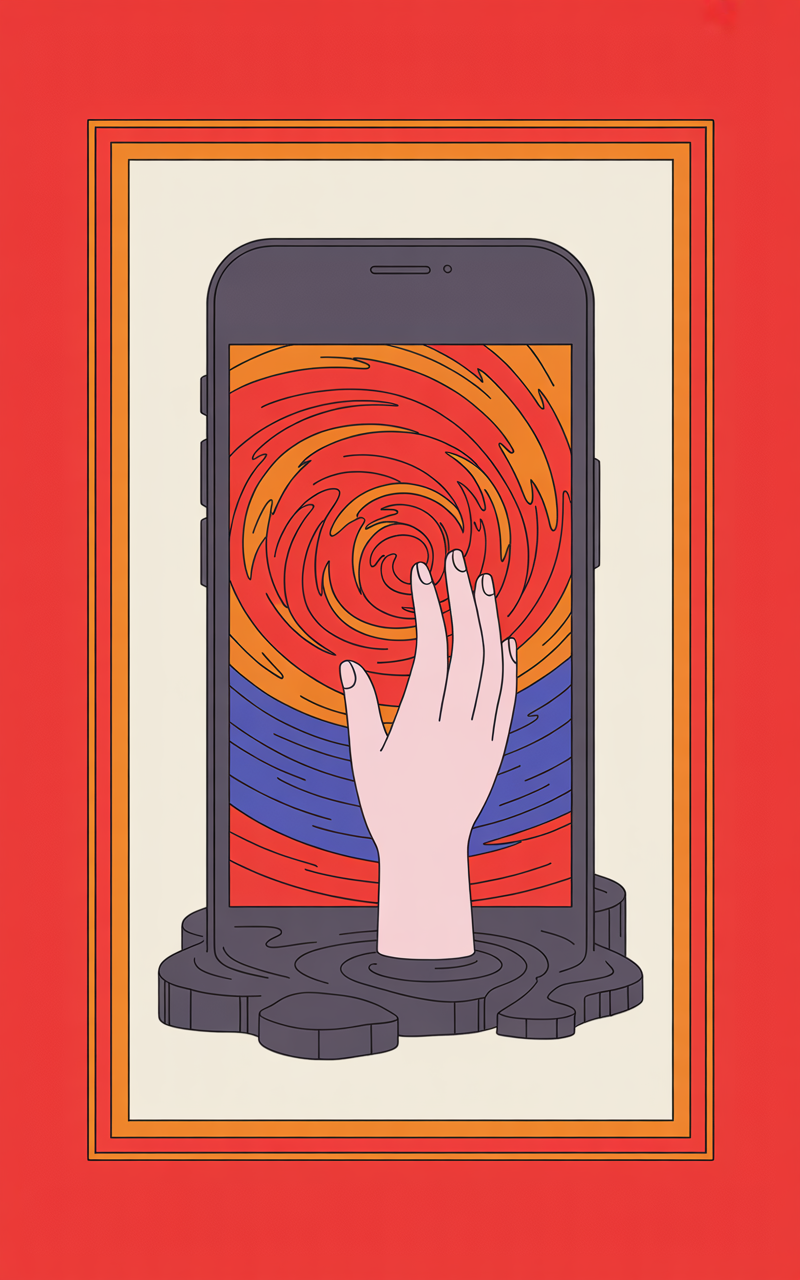
Story: A person is sitting in our beautiful, warm café. The smell of coffee is in the air, music is playing. But they are not there. They are hunched over their phone, lost in the cold, blue light of a small rectangle. They have physically gathered, but their consciousness is elsewhere.
The Truth: Your phone is not a device; it is a destination. It is a room you can enter at any time to escape the reality of the present moment. But every moment you spend in that artificial room is a moment you are not living in the only room that is real: the here and now.
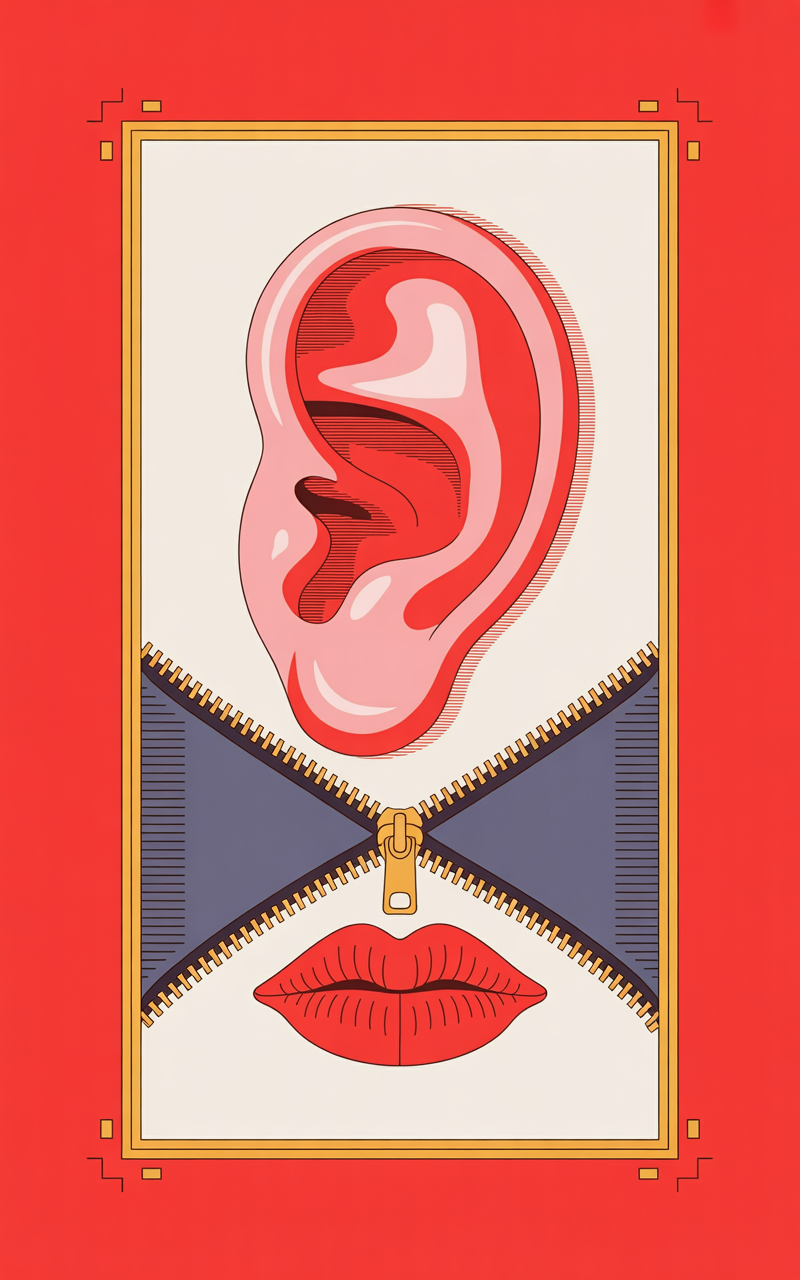
The Sickness of Waiting for Your Turn to Speak
Story: A close observation of a conversation where you can see one person is not listening. They are formulating their response, waiting for a gap to insert their own story, their own opinion. They are in a debate, not a dialogue.
The Truth: Most conversations are just two monologues colliding. True listening is a state of total presence, a meditative act of receiving without the neurotic need to prepare a reply. Can you listen so intensely that you forget you have a self to defend?
The Space Between the Sips
Story: A narrative describing a conversation between two old friends at our café. We don't focus on their words. We focus on the silences—the comfortable pause after a shared memory, the moment of quiet understanding that needs no language, the shared gaze into their cups.
The Truth: We are conditioned to fill silence, for it makes us nervous. But the most profound connection does not live in the noise of conversation; it lives in the shared stillness between two souls.
The Strength of a Cracked Cup
Story: We have a favorite cup in the café. It has a small, hairline crack. It is not perfect. But it is cherished. We tell a story of how this cup reminds us of ourselves and the people we love—that the cracks, the imperfections, are where the character is. It's what makes it unique.
The Truth: We are conditioned to hide our cracks, to present a facade of perfection. But connection is not found in perfection. It is found in the shared vulnerability of our imperfections. Your cracks are what let the light in, and out.
The Tyranny of the 'Productive Pause'
Story: We tell the story of a man who takes his mandated 15-minute break, phone in hand, trying to "relax efficiently." He answers two emails, scrolls his feed, and returns to work more tired than before. We contrast him with a woman staring out the window, doing nothing. Who was truly on a break?
The Truth: A pause taken only to recharge for more work is not a pause at all; it is a leash. True rest is an act of rebellion, not recovery.
We Don't Sell Waffles. We Offer Sanctuary
Story: A reflection on what people are truly buying when they come to Heaffles. Are they buying a waffle? Or are they buying permission to be alone with a book? Are they buying a coffee? Or are they buying a safe space for a difficult conversation?
The Truth: The product is the excuse. The food and drink are the tickets to the show. The show itself is about creating a space where you can drop the masks, breathe, and simply be. Any café can sell you a waffle. We are here to offer you a moment of sanctuary from the madness of the world.
What Hunger Are You Truly Feeding?
Story: A reflection on the different "hungers" we see at the café. The hunger for comfort on a rainy day. The hunger for celebration with a friend. The hunger for solitude after a long week. The food is often just the excuse, the tool.
The Truth: We have only one word for 'hunger,' but it wears a thousand masks. Often, when you reach for food, your body is not hungry. Your soul is. The question is not 'What do I want to eat?' but 'What am I truly hungry for?'
Who Are You When You Are Not Doing?
Story: A simple, photographic post showing a series of hands at a table. One is drumming its fingers, another is holding a pen, another is clenched. Then, a final photo of a hand resting, palm open, on the table. The text is a simple meditation.
The Truth: We have confused our identity with our to-do list. Your job is what you do, your errands are what you do. But who are you when all of that is stripped away? Here, you are not a 'somebody' doing 'something.' You are just… being.
Whose Thoughts Are You Thinking?
Story: We observe the snippets of conversation around us—opinions about the news, about a movie, about politics. We reflect on how many of these thoughts are original, and how many are simply repeated, borrowed from a screen or a parent or a culture.
The Truth: Your mind is a marketplace, filled with second-hand opinions you have collected throughout your life. To gather your own thoughts is a rebellious act. It requires the silence to ask: "What do I truly believe, once I remove the voices of everyone else?"
Your Body is a Temple, Not a Machine
Story: A narrative contrasting two ways of eating the exact same Nordic toast. One person eats it while walking, scrolling their phone, barely tasting it—'fueling up'. The other is sitting, observing the colours, the texture of the rye, the glistening of the salmon. One fuels a machine. The other honors a temple.
The Truth: The modern world sold you the lie of "food as fuel." A car needs fuel. You are not a car. You are a living, breathing universe. To eat mindfully is not a luxury; it is a profound act of self-respect.