The Loneliness of 'Fitting In'
There is a man who comes here every Tuesday.
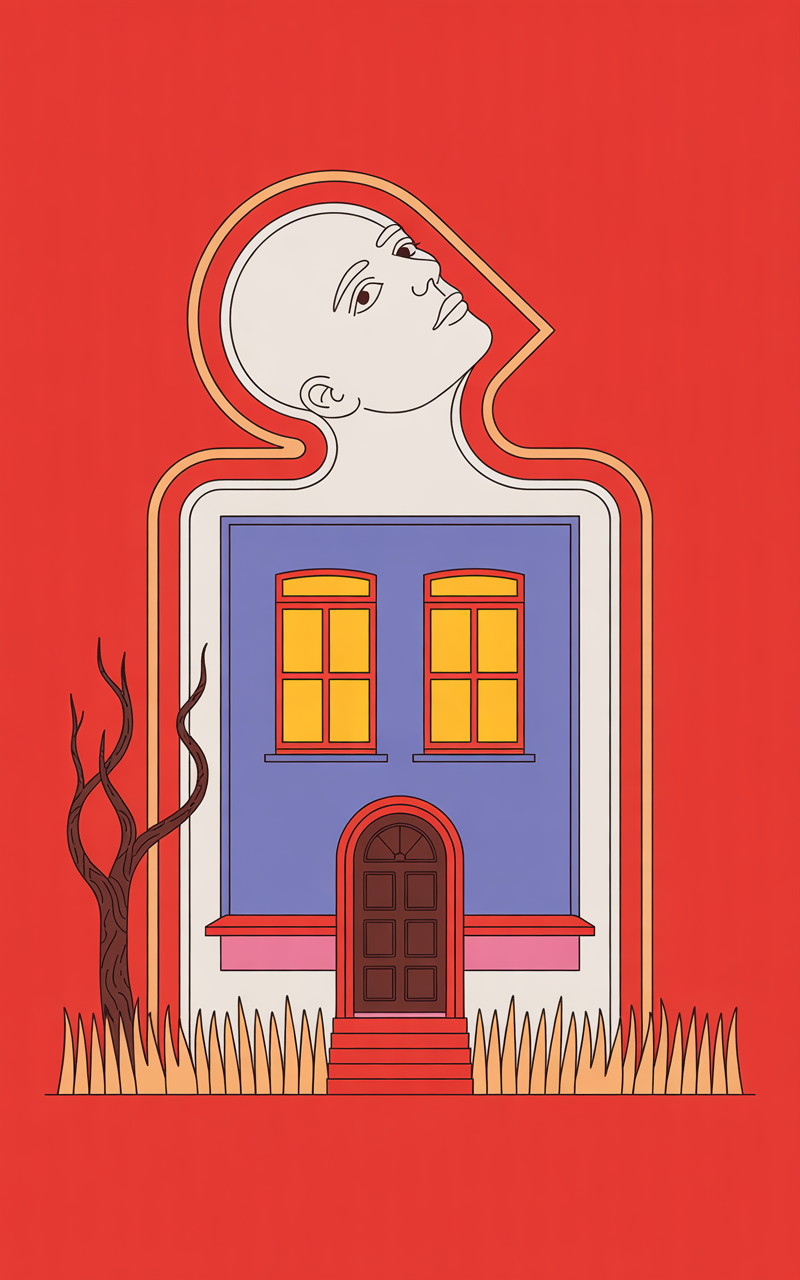
He is pleasant. He is polite. He wears a suit that fits him perfectly. He knows exactly when to laugh at the barista's joke. He knows exactly how to order his macchiato so it sounds sophisticated but not demanding. He sits. He smiles at the other regulars. He blends in so seamlessly that he almost disappears into the beige of the walls.
He has mastered the art of "fitting in."
And he is the loneliest man in the room.
We have been taught a very cruel lesson by our schools, our families, and our society. We have been taught that "belonging" means becoming like everyone else. We are told that if we sand down our rough edges, if we hide our weirdness, if we dilute our opinions, we will be accepted. We will be part of the tribe.
So we take a chisel to our own souls. We chip away the parts of us that are too loud, too sensitive, too angry, or too wild. We squeeze ourselves into the tiny, suffocating box of "Normal."
And it works. The world accepts the box. But it does not accept you.
Because you are not in the box. You are hiding behind it, screaming in the dark, while the box gets the handshake.
This is the tragedy of the modern social life. We are surrounded by people, yet we feel completely isolated. Why? Because we are presenting a false front. If people love the mask you wear, you will never feel loved. You will only feel that the mask is successful. You will live in constant terror that the mask might slip.
This is not community. This is a masquerade ball.
True community—the kind we are trying to cultivate at Heaffles—is not about fitting in. It is about standing out, and being held anyway.
It is easy to be around people who agree with you, look like you, and act like you. That is a club, not a community. A community is a mess. It is a collision of jagged rocks.
We don't want your politeness. Politeness is a distance. It is a way of keeping people away from your center. "I am fine, how are you?" is a spell we cast to ensure no real intimacy happens.
We want your reality.
We want the version of you that is having a terrible morning. We want the version of you that has a weird laugh. We want the version of you that disagrees with the music we are playing.
Because here is the spiritual truth: Smooth surfaces slide off one another.
If you polish yourself until you are frictionless, you cannot connect. You just glide past people. Connection requires friction. It requires texture. It requires the little hooks and jagged edges of your personality to latch onto someone else's.
Look at the table with the group of teenagers. They are loud. They are arguing. One of them is crying. They are not trying to fit into a mold. They are raw. And in that rawness, there is life. They are tangling with each other.
The man in the suit? He is safe. No one will judge him. But no one will know him. He will drink his coffee, leave a tip, and walk out exactly as empty as he walked in.
Don't be him.
The next time you come in, dare to be a little difficult. Dare to be a little "too much." If you are sad, carry your sadness like a heavy coat; don't pretend it’s a sunny day. If you are excited, let your voice crack.
Belonging is not a passive reward for behaving well. It is an active risk. It is the courage to say, "Here I am, with all my cracks and flaws," and to wait for the echo that says, "I see you. Me too."
Stop trying to fit in. You were not made to fit. You were made to take up space.